
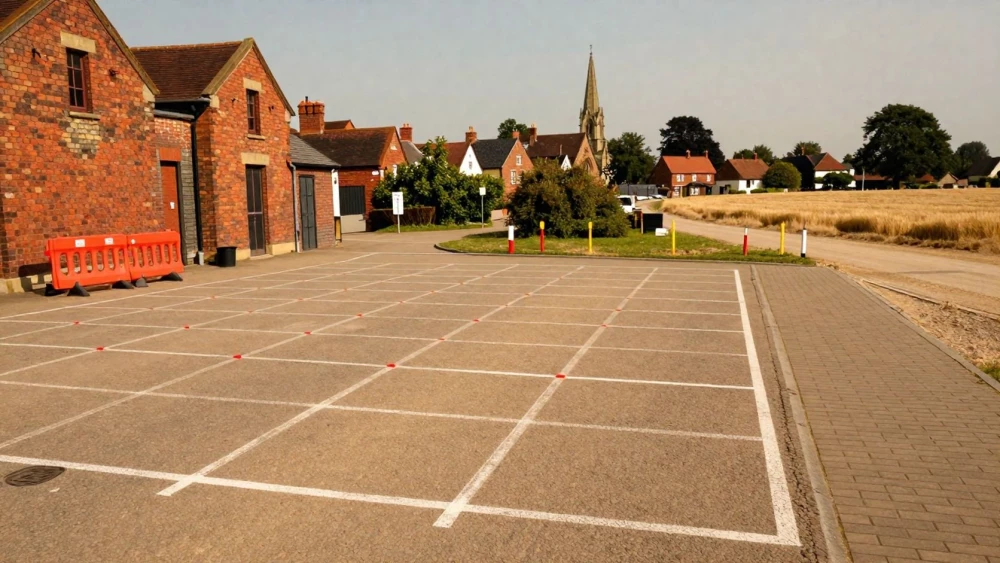
GPR Surveys
Get in TouchAt Northampton Surveys, we specialise in delivering GPR surveys, providing precise subsurface insights for construction and engineering projects. Ground Penetrating Radar (GPR) uses radio waves to map underground utilities, voids, and features without excavation.
Our equipment and expertise help detect a range of subsurface objects, including pipes, cables, and structural anomalies. GPR is valuable in both urban and rural settings, allowing us to serve diverse environments effectively.
Contact us today to arrange a survey .
How Much Do GPR Surveys Cost?
GPR surveys typically cost between £500 and £1,500 per survey. The price depends on the survey area, complexity, and specific project requirements.
For larger or more challenging sites, additional charges may apply due to extended time on site or specialised equipment needed, such as high-frequency antennae for detecting smaller objects or reinforced concrete. Projects in congested urban environments might require more detailed scans with higher resolution.
Factors like terrain type and access can also influence costs, as rough or limited-access sites may necessitate longer setup times. We adhere to PAS 128 standards to ensure the precision and reliability of our surveys.
Contact us for a detailed quotation tailored to your project's needs.
How Does GPR Surveying Work?
GPR surveying involves a series of methodical steps to ensure accurate detection of subsurface features:
Planning: We assess the survey site, taking into account its size, soil type, and intended survey depth, to determine the appropriate equipment and settings. This phase often involves selecting suitable antenna frequencies, which can range from 100 MHz for greater depth penetration to 1,000 MHz for finer resolution at shallower depths.
Data Collection: GPR equipment, such as the SIR-4000 control unit, transmits radio waves into the ground. These waves vary based on the selected frequency and reflect back when encountering objects like pipes, voids, or archaeological structures.
Data Analysis: We analyse the reflected signals using specialised software like RADAN to produce detailed subsurface maps and reports. This software helps identify the depth and shape of detected objects, ensuring precision in the results.
Reporting: Our team provides you with comprehensive findings, highlighting any anomalies or objects detected. Our reports offer critical insights for civil engineers, construction managers, or conservationists, ensuring informed decision-making.
If you require further clarification or wish to schedule a GPR survey, please contact us.
What Are the Benefits of GPR Surveys?
GPR surveys offer numerous advantages due to their innovative and adaptable nature. By using electromagnetic radiation, GPR can penetrate different materials such as concrete, soil, asphalt, and rock, providing detailed subsurface profiles.
This makes GPR an ideal solution for construction planning, infrastructure assessment, and environmental studies.
Non-destructive: GPR does not require drilling or excavation, preserving landscapes and structures.
Versatile: Suitable for various terrains and surfaces, including concrete, soil, asphalt, and rock.
Comprehensive: Detects a wide range of materials like metals, plastics, and voids, along with utilities such as cables and pipes.
Safety: Minimises risk by identifying hazards before digging, reducing the likelihood of accidents.
Typically, conducting a GPR survey can save both time and costs associated with manual digging by quickly producing accurate data on underground conditions. Contact us to learn how our GPR surveys can address your specific project needs.
When Are GPR Surveys Needed?
GPR surveys are essential in several situations, using a variety of specialised equipment and methods to support diverse projects.
Construction projects requiring utility mapping: We help identify the location of underground pipes and cables to prevent damaging them during excavation, employing frequency-modulated radar waves for precise mapping.
Archaeological sites needing identification of historical features without excavation: GPR allows us to detect buried artefacts and structures without disturbing the site, adhering to preservation standards.
Environmental assessments checking for soil contamination: We assess subsurface conditions by measuring reflection amplitude, informing remediation strategies.
Infrastructure maintenance and inspection for locating potential structural issues: We evaluate subsurface integrity with accurate depth data, aiding in proper maintenance schedules.
In all these scenarios, we comply with relevant safety standards to ensure effective and safe survey practices. Contact us to discuss your project requirements.
Why Choose Northampton Surveys for GPR Surveys?
At Northampton Surveys, we prioritise precision and reliability in all our GPR surveys. Using our ground-penetrating radar systems, which operate on various frequencies such as 250 MHz and 500 MHz, we ensure accurate subsurface data collection and analysis.
This technology is adept at detecting utilities, voids, and underground storage tanks, making it suitable for urban planning, archaeological investigations, and construction projects. Our team is trained in interpreting complex geophysical data, adhering to industry standards like PAS 128 for utility detection.
We have extensive experience servicing diverse environments, including industrial sites, historical landmarks, and residential projects, making us the preferred choice for GPR services. Our client-focused approach guarantees tailored solutions to meet your specific needs.
Contact us today to discuss your requirements.
Frequently Asked Questions
How accurate is GPR surveying?
GPR surveying is highly accurate, offering precise detection of subsurface features down to depths of several metres. Factors such as soil composition and moisture levels may affect accuracy, but our team ensures optimal settings for reliable results.
How long does a GPR survey take?
Most GPR surveys take between one to three days, depending on the size and complexity of the site. Additional time may be required if multiple passes or detailed analysis is necessary.
Can GPR detect all types of underground utilities?
GPR can detect most types of underground utilities, including metallic and non-metallic pipes. However, certain objects shielded by dense materials may limit detection.
Is GPR surveying safe for historical sites?
Yes, GPR is non-invasive and safe for use on historical sites, allowing for the identification of buried artefacts and features without disturbing the ground.
Do I need to prepare my site before a GPR survey?
Minimal preparation is required. Ensure the surface is accessible, and remove any obstacles that might obstruct the equipment during the survey.
Get a Free Quote for GPR Surveys
If you're looking for reliable GPR surveys, contact Northampton Surveys today. Our expert team is ready to assist with all your subsurface detection needs.